Social Return as part of sustainable design
Sustainability is also about people
Sustainability is often linked to the environment and materials, but the social component is just as important. Projects have an impact on people, employment and social structures. Social Return, or SROI, focuses on that social value by creating opportunities for inclusivity, work experience and participation of people at a distance from the labor market. In doing so, Social Return connects sustainable design to social responsibility.

By including Social Return, sustainability becomes broader and more human. It shows that projects not only have an impact on the physical environment, but also on society. This creates a more complete picture of what sustainability really means.
From obligation to added value
Social Return is often seen as a mandatory part of tenders. As a result, there is a risk that it will be filled out as a check list. However, when Social Return is integrated into the project, there is room for real added value and long-term impact.
Collaborations with social workshops, learning paths and inclusive teams strengthen the project. They provide engagement, knowledge sharing and greater support, so that Social Return makes a substantive contribution instead of remaining a formal obligation.
“Real impact happens when everyone can participate.”
Social Return in practice
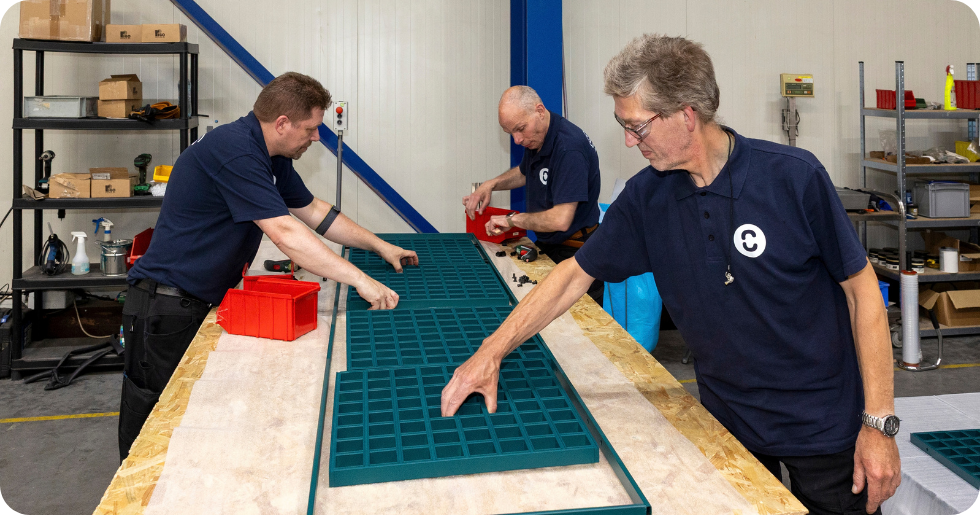
Social Return requires conscious choices in organization and implementation. By dividing activities, making processes accessible and collaborating with the right partners, there is room for participation without sacrificing quality. This approach sometimes requires extra coordination, but often results in more involvement and new perspectives.
In practice, it appears that social impact and craftsmanship reinforce each other. People who have the opportunity to contribute work on the project with pride and responsibility.
An indispensable link in integral sustainability
When Social Return is linked to circular and sustainable design, an integrated approach to impact is created. The environment, economy and society are viewed in conjunction. This is how Social Return grows into an integral part of future-proof projects that not only cause less damage, but also actively create social value.