From waste to value: how Zwartwoud designs and produces circularly
From linear to circular thinking
The world of interior design is changing rapidly. Where traditional interiors were designed according to a linear model, producing, using and discarding, the focus is increasingly shifting to a circular economy where raw materials retain their value and waste is prevented.
Circular interior design does not focus on the end product, but on the entire life cycle. This means that design choices are tailored at an early stage to future reuse, disassembly and value retention. By keeping materials in circulation for as long as possible, the environmental impact is reduced and the dependence on new raw materials is reduced.
At Zwartwoud, circularity forms the basis of how we design and produce. Each project starts with the question: what materials are already available and how can we reuse them in a new context?
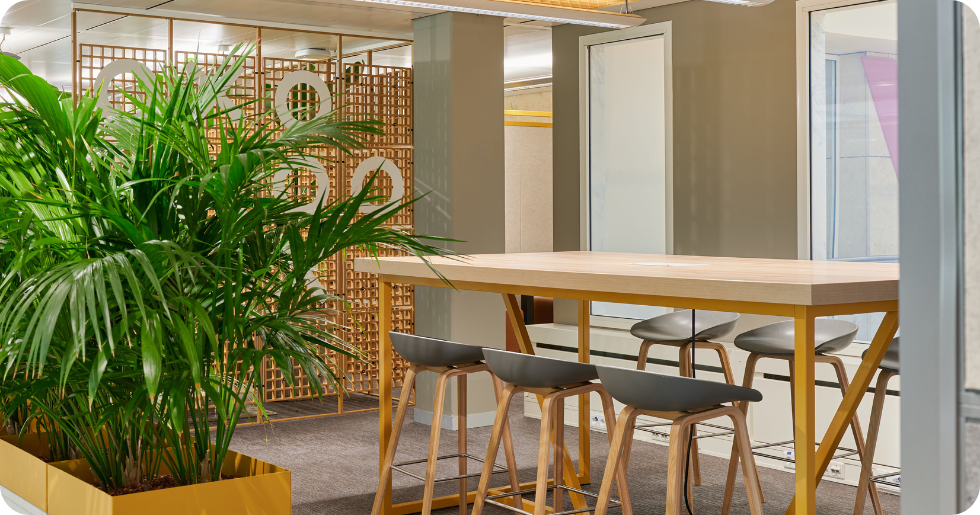
For ABN AMRO, for example, we have developed room dividers from existing ceiling panels. By harvesting, testing and redesigning these materials, a solution was created that is both aesthetically and circularly valuable. The project shows how secondary raw materials can be reused within a circular value chain.
Design according to the principles of the R ladder
Circular design often uses the R ladder: a hierarchical model that organizes strategies from Refuse and Reduce to Re-use, Refurbish and Recycle. The higher a strategy is on the ladder, the greater the preservation of material value.
We strive to keep materials as high on this ladder as possible. This means that we first look at the reuse of existing elements before using new materials.
By using demountable connections and a modular structure, parts can be easily modified or replaced without losing the entire product. This supports longevity and increases the residual value of materials.
In addition, we apply design principles such as Design for Disassembly, dry connections, functional separability and material passports. As a result, products can be easily disassembled, modified or reused, so that materials retain their value and remain suitable for future applications within a circular chain.
“At Zwartwoud, circular design starts with one simple question: what do we already have?”
From residual flow to new value
What is traditionally seen as waste is just the beginning of a new design phase within circular projects. Through upcycling, materials get a new application where the value is maintained or even increased.
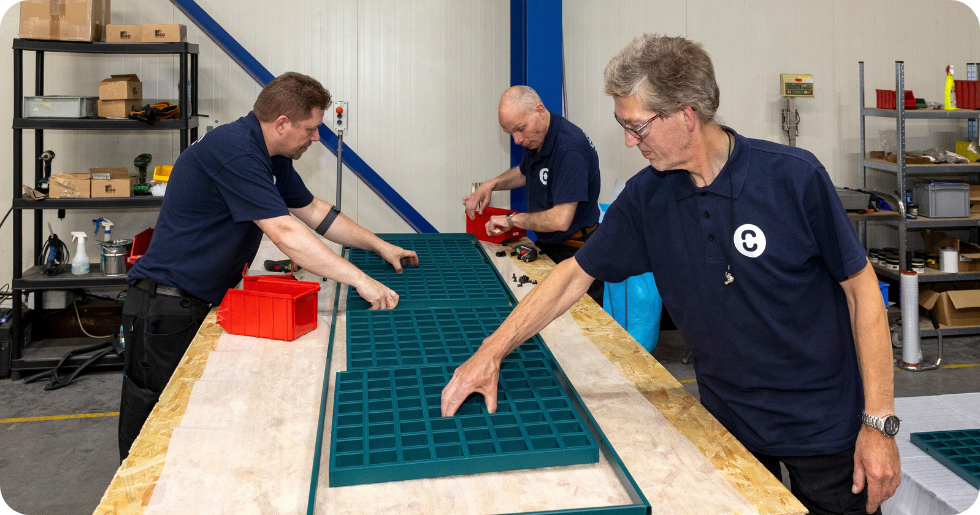
Examples include residual wood that is used in acoustic panels, existing steel structures that are being reused and old furniture that is being refurbished or reused. These forms of reuse are in line with circular strategies such as re-use, refurbish and repurpose. within the R ladder, where materials retain their value and the use of new raw materials is reduced. By reintegrating existing elements into the design, material value is maintained and the environmental impact of the project is significantly reduced.
This approach requires co-creation within the chain. By working with clients, suppliers and partners, a circular value chain is created in which materials go through multiple life cycles.
The result is an interior that is not only functional and aesthetically strong, but also demonstrably contributes to CO₂ reduction and a lower environmental impact.
This creates a design that not only adds value today, but also remains relevant in the future.
.png)