You need to be able to prove sustainability
As of September 27, 2026, stricter rules for sustainability claims directed at consumers will apply within the European Union. In the Netherlands, regulations regarding the substantiation of sustainability claims are already in force. With the European Empowering Consumers for the Green Transition directive (Directive (EU) 2024/825), this development is now being implemented more broadly across the EU.
The regulations focus primarily on the consumer market and therefore have no direct impact on the projects we carry out at Zwartwoud. Nevertheless, the subject touches on a development we are seeing more and more clearly within our industry: anyone making claims about sustainability must be increasingly able to demonstrate the basis for them.
.png)
From general claims to concrete information
The reasoning behind the stricter rules is clear: sustainability claims directed at consumers must be specific and substantiated. General terms such as sustainable, green, and environmentally friendly cannot simply be used when it is unclear what the claim refers to or when no verifiable evidence is available.
For example, does a claim concern material use, origin, CO₂ emissions, lifespan, repairability, or reuse? Then it must be clear exactly what is meant and what that statement is based on.
Stricter conditions also apply to sustainability labels. Labels must be based on transparent criteria and independent verification, or be issued by a government authority. With this, the European legislator aims to better protect consumers against unclear or misleading sustainability claims and greenwashing.
Verifiability is becoming more important
Although the regulations are primarily aimed at the B2C market, they fit within a broader trend. Sustainability ambitions alone are increasingly insufficient. Organizations, clients, and supply chain partners want to know what is actually happening and how it can be proven.
A statement like "we work sustainably" is, for example, very general. It is much more concrete to show which materials have been used, what has been reused, where raw materials come from, or what CO₂ reduction has been demonstrably achieved.
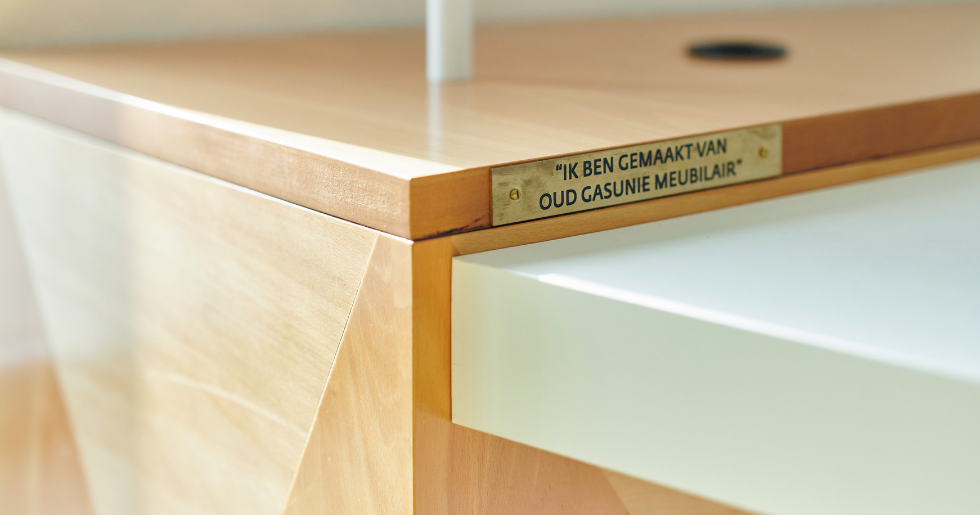
This nuance is particularly important in interior projects. An interior in which existing components are reused, for example, is not automatically fully circular. By documenting what has been retained, reused, refurbished, or newly applied, a much clearer picture of the choices made and their impact emerges.
The role of certification
Certification can help to have components of sustainability policy, business operations, and supply chain management independently verified. It thus provides a valuable basis for documenting and substantiating sustainability information.
At Zwartwoud, we work with various certified management systems, chain systems, and assessment methodologies. For instance, we operate according to ISO 14001, the international standard for environmental management. Through the CO₂ Performance Ladder, we map our CO₂ emissions and work purposefully on reduction within our business operations, projects, and supply chain.
For wood, we work with FSC and PEFC Chain of Custody certification. These systems make it possible to track certified wood flows within the chain and demonstrably record their origin. In addition, our sustainability management is assessed via EcoVadis, where Zwartwoud currently holds a bronze rating.
Other certifications also help us to structurally document and improve our processes. ISO 9001 focuses on quality management, and our VCA* certification focuses on safety, health, and the environment during the execution of work.
A certificate alone is not enough
A certificate does not automatically mean that any sustainability claim can be made. It demonstrates that a specific standard, method, or system is being applied. The substantiation must therefore always align with what is actually being claimed.
Anyone communicating about certified wood, for example, must be able to demonstrate that the material in question falls within the certification system. Anyone speaking about CO₂ reduction must provide insight into what was measured, over what period, and in relation to what baseline. And in the case of reuse, it must be clear which materials or components were actually repurposed.
It is therefore not about having as many labels or certificates as possible, but about providing the right information for the right statement.
From telling to showing
We recognize this principle in our own projects as well. Sustainability and circularity become more powerful when you don't just talk about your ambition, but show what has actually been done.
That is why we map material flows, perform CO₂ calculations, and document which components are retained, reused, or repurposed. This creates information that not only provides insight into a project but can also be useful for clients.
With validated project information, CO₂ calculations, and insight into material flows, we can contribute to sustainability reports, certification processes, and ambitions regarding BREEAM, CSRD, Paris Proof, and CO₂ reduction. We know which information is relevant for these purposes, how it must be validated, and how we can provide the necessary substantiation.
The information required varies per project, objective, and claim. But the trend is clear: sustainability is becoming less about just telling and more about showing.
Q&A
What changes on September 27, 2026?
As of September 27, 2026, stricter European rules for sustainability claims directed at consumers will apply. In the Netherlands, rules for the use and substantiation of sustainability claims are already in place. The European directive ensures that requirements for general environmental claims and sustainability labels, among other things, are tightened more broadly across the EU.
What does this development mean for the interior design industry?
The new regulations focus primarily on sustainability claims directed at consumers and therefore have no direct impact on our industry. Nevertheless, the underlying trend is recognizable. Within interior projects, there is an increasing demand for insight into material usage, origin, reuse, and CO₂ impact.
Terms like sustainable, circular, and responsibly produced are used frequently, but only gain real value when it is clear what is meant by them. For example, by making it transparent which existing components were retained, how much material was repurposed, where raw materials come from, or what CO₂ reduction has been achieved.
Can you still use terms like ‘sustainable’ and ‘environmentally friendly’?
Yes, but when communicating with consumers, general environmental claims cannot be used without qualification. It must be clear what is meant by a claim, what it relates to, and how it is substantiated.
Why are certificates important?
Certificates can provide independent substantiation for specific aspects of sustainability. For example, they can demonstrate that a management system meets certain standards or that the origin of materials is guaranteed within a recognized certification system. However, a certificate does not automatically serve as the substantiation for every sustainability claim.
Which sustainability certifications does Zwartwoud hold?
Zwartwoud operates according to ISO 14001 and the CO₂ Performance Ladder, among others. For wood flows, we use FSC and PEFC Chain of Custody certification. In addition, our sustainability management is assessed via EcoVadis. We are also certified for ISO 9001 and VCA*, focusing on quality management and safety, health, and the environment, respectively.
How do you demonstrate sustainability?
This can be achieved through certifications, emission inventories, material data, EPDs, LCA calculations, CO₂ calculations, material passports, and information regarding the origin and composition of materials. The specific information required depends on the project, the sustainability claim, or the reporting or certification for which the substantiation is being used. Furthermore, insight into material flows and environmental impact can contribute to processes and ambitions related to, for example, BREEAM, CSRD, Paris Proof, and CO₂ reduction.