All disciplines at the table from the start: how we achieved a circularity score of 69% at ING Rotterdam
ING
Located on the iconic Coolsingel in the heart of Rotterdam, ING’s first circular bank branch has been open for a while now. The office had been there for years, but it recently underwent a major circular transformation. It is now the most sustainable ING bank branch in the Netherlands. Upstairs in the meeting room, Yannic Alidarso (designer and creative strategist at Creneau International) and Eric van Balen (Design Manager at Zwartwoud) discuss the realization of this impressive project.
- Project management
- Product development
- Production
- Turnkey delivery
- Creneau International
- Klokgroep
- The Good Floor

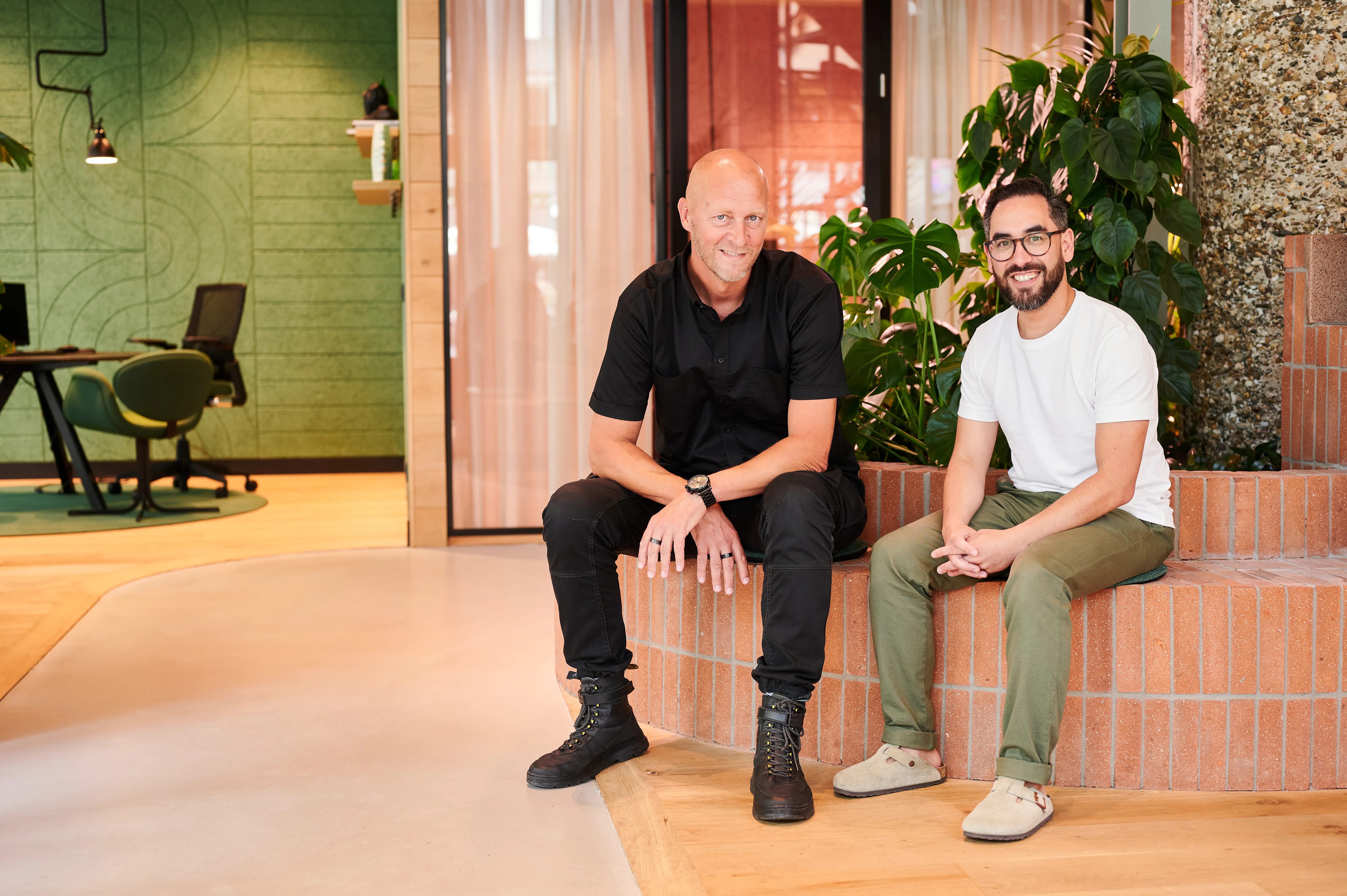

"A key role for Zwartwoud lies in their ability to think along with us, including in their collaboration with creative agencies."
Yannic: I have been involved with ING since 2015 as a designer for what was then their new banking concept. Many developments have taken place over the past few years, such as the ING pavilion we developed together. And now this fantastic space, this beautiful circular bank branch. We had been talking to the affiliated construction partners and ING for some time about making a sustainable switch. With this branch, ING decided to truly make that conscious move.
Eric: I found it impressive—revolutionary, actually—that ING managed to assemble a group that functioned as a construction team right from the start. If you want to design circularly, you have to ensure that all disciplines are at the table from the very beginning to guarantee a high-quality end result. You are dealing with a new design methodology, and many people are not yet aware of that.
Yannic: Exactly. We brought all disciplines together early on, including the installers. This allowed us to discuss the process collectively and explore circular possibilities within each of our respective fields.
Eric: People still tend to think in traditional ways. It’s no longer a case of the architect taking the lead while we wait on the sidelines. We look at it together: this is the concept, how are we going to approach it? What do we have in stock, and what can we apply?
Yannic: It was a great team to develop this new concept with. Every discipline tried to contribute as much as possible within their area of expertise. With my background as a product designer, I can make a pretty good guess about what makes for good choices and materials, but I needed expert help to verify that. Parties like Klokgroep and Zwartwoud, who bring solutions to the table, are essential in that regard.
Eric: A key role for Zwartwoud is their ability to think along with us, including when working with creative agencies. They bridge the gap: what is feasible in terms of execution, budget, and timeline? Creneau had perfectly detailed drawings and a wealth of knowledge regarding circular design, so it was a pleasure to work together. We continue to look at how to maintain the best possible result, together with all the other parties involved in this project.
Creneau and Zwartwoud are aligned in their approach to making things. We share the same vision.
Yannic: Creneau has been moving toward circularity for about 8 years now. We’ve even given it a name: from aesthetics to "aest-ethics." Because as a designer, you can no longer judge based on aesthetics alone; you have to incorporate ethical values as well.
Eric: Something I found impressive about this circular bank concept is that it looked at how to source as much as possible locally. Which parties can you involve to reach a solid starting point? We are based in Rotterdam, and you incorporated that into the plan. That aligns perfectly with how we start our projects.


'Met mijn achtergrond als productontwerper kan ik aardig gissen wat goede keuzes en materialen zijn, maar ik had goede hulp nodig om dat te kunnen verifiëren. Zwartwoud kwam met oplossingen en was daarin heel belangrijk.'
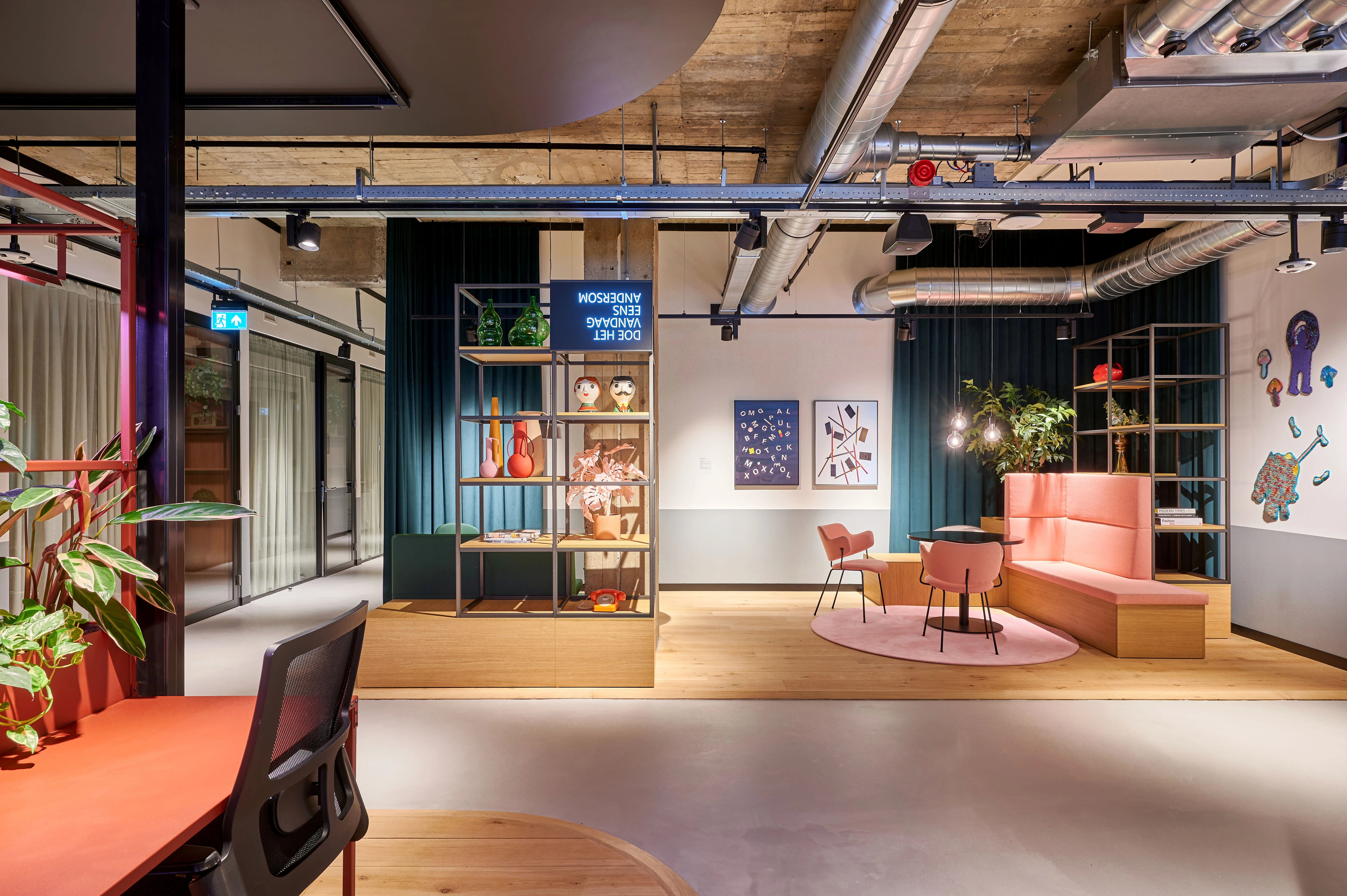
'As a construction team, we had hoped for a percentage of around 50%, but thanks to everyone's efforts, it turned out to be 69%.'
Yannic: ING gave us all the opportunity to make that conscious shift during this project. External parties were brought in to scrutinize all intervention options and their results, and to measure them factually. We constantly looked at different options together; for example, do we source the wood from France and glue it into a duo-plank, or do we source it from Breda? For each component, we provided two or three options, which we then composed together. That is how choices were made. The measurements were based on the BCI model: Building Circularity Index. As a construction team, we had hoped for a percentage of around 50%, but thanks to everyone's efforts, it turned out to be 69%. That was a positive surprise for us. In addition, we managed to achieve a 62% CO2 reduction together.
It was important to ING that the design remained as true as possible to the original concept. That was a challenge, and a complex puzzle for both the design and construction phases, which had to go hand in hand. But I feel that all the parties involved succeeded in that very well.
Eric: If you look at it broadly, you can clearly see it’s one brand. A striking and beautiful detail I find is the use of the old cabinets. They were repurposed into the framework and parts of the bar. You can really see that in the final result.
Yannic: You can see the core material, which designers and furniture makers often think needs a veneer edge finish. We deliberately chose not to do that, so you can see how it’s made. That can be a challenge: as a designer and builder, you really want to show the story behind it, but the quality still has to be up to standard. How do you shape that?
Eric: Yes, I find what you’re bringing up quite interesting. There needs to be a shift in the level of acceptance regarding design and the appearance of things. Because with a circular renovation, you’re always dealing with experimentation, as well as old furniture that you’d prefer to reuse. It’s important to make the client aware: be mindful that we are reusing old materials. So, you can’t expect everything to be as perfect as you’re used to.
Yannic: I think the reception desk, which now serves as a vanity unit, is a successful example.
Eric: And here’s a fun one: when you use the restroom, you wash your hands in a sink made from an old reception desk. For about 15 years, people from Rotterdam stood at those desks to get advice, and now they can wash their hands at them.

Yannic: I’m also happy with the floor in the pantry and restrooms. It’s a floor from The Good Floor, who make new flooring out of harvested plastic. We invited all the ING Rotterdam employees to fish plastic out of the Meuse, and that was processed into this floor. During the renovation, employees could come and take a look, and they saw the floor they had fished for themselves. That’s how you create a sense of ambassadorship.
Eric: And after this store is no longer in use, almost all the materials can be reused.
Yannic: During this project, quite a lot was asked of all the parties involved. But when I see the circular score we achieved and that we succeeded in creating a circular sibling to the existing concept, we can be very proud of that as a group. Everyone pushed the boundaries within their own discipline.
Eric: I completely agree. It’s revolutionary that people dare to let go in this way and still dare to collaborate. A partnership had to be formed, and we succeeded. I hope this circular process becomes more widely accepted in the future. It would be best if it were implemented in education: learning to think in a new way together.
Yannic: The circularity movement has proven not to be just a trend. It’s not a passing phase. I find the speed at which developments are taking place and how they are taking root in the professional field very encouraging. The process has brought a lot to all parties. For future projects, we can look at which initiatives we can deploy again.
Eric: The beauty of it is: we don’t see each other as competitors, but as partners, asking each other: how can we help one another? It’s up to us together to make the client aware of circularity and the options it brings. As mentioned: in circular projects, forces must be joined at an early stage.


Get in touch with [name visible on live site]
We'd love to tell you more about how we work. Schedule an appointment with us right away or leave your details. We will contact you as soon as possible.